
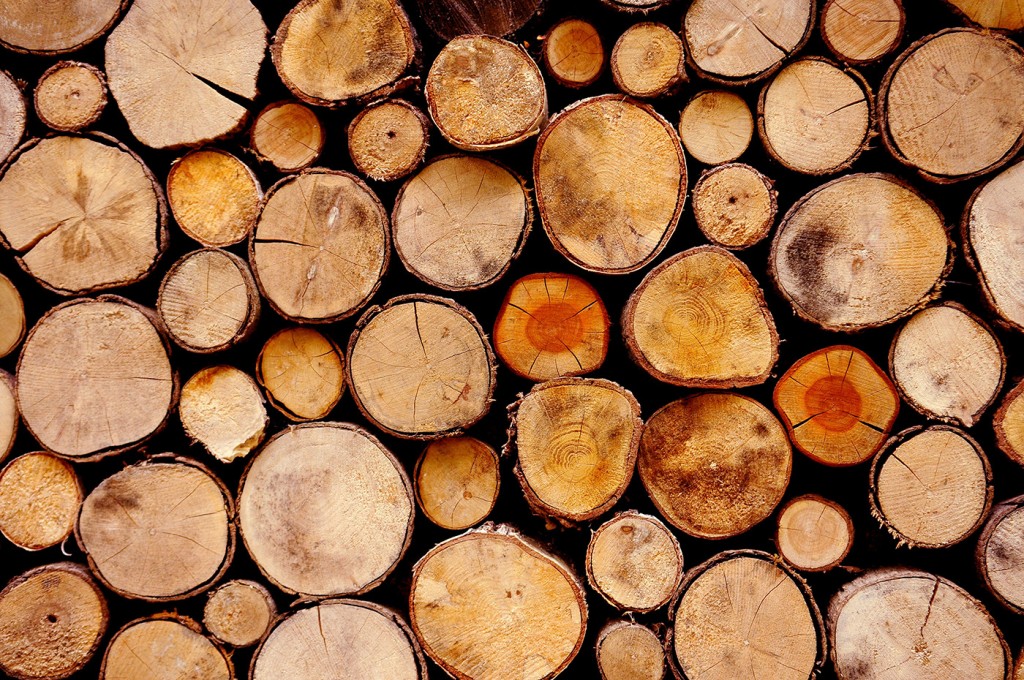
What is the Best Type of Wood to Burn in Your Fireplace?
Hardwoods - Hardwoods are the best wood to use for fireplace, stoves, furnaces and other wood-burning appliances. The density allows them to burn longer, and thus making them a more efficient type of wood to burn.
We did some research here, because while the short answer is pretty straight forward, we wanted to give you some “whys” and some “whats” when it comes to wood, and things to be aware of to ensure the efficiency of your wood-burning appliances.
The folks over at woodheat.org have dropped a few hints we wanted to pass onto you.
The below chart indicates the wood that would be the most dense on down to lower density types of wood:
Density of Common Tree Species
Here is a list of the tree species commonly used for firewood, according to their relative densities. Trees at the beginning of the list have the most energy per cord, while those toward the end of the list have the least energy per cord. Although they are less dense, the species in the latter half of the list can make excellent firewood for spring and fall because they make heat control easier and don't tend to overheat the house.
Ironwood | Rock Elm | Hickory | Oak | Sugar Maple | Beech | Yellow Birch | Ash | Red Elm | Red Maple | Tamarack | Douglas Fir | White Birch | Manitoba | Maple | Red Alder | Hemlock | Poplar | Pine | Basswood | Spruce | Balsam
If you have chopped wood, which in central Indiana may not be the case — not to underestimate our DIYers, ensure you have left the wood out to dry for some time. Now that Fall is here, you’ll want to cover the wood to ensure it’s dry enough for burning.
As we head into this heat season, we’ll leave you with some tips from woodheat.org on buying firewood (we picked just a few):
- Ask friends and neighbors who burn wood for recommendations
- Do some quick research and select the dealer who seems most reliable and comes with the best recommendations
- Do not order wood by phone — go to the storage area to inspect the wood and take a tape measure to check piece length and pile size
- Look for wood that is clean — sand and mud on firewood makes it less desirable
- Make sure the pieces are split small enough for your appliance; you don't want to have to re-split it all
- Do not buy randomly piled wood — only stacked cords can be counted
- If possible, get the wood in spring and stack it in your own yard so you can control the seasoning process
Heat season is here, and once you have ensured the safety and functionality of your fireplace and other wood-burning appliances, it’s certainly time to consider what you will use to fuel the fire, literally.
Haven’t had your fireplace, chimney or other wood-burning appliances cleaned and inspected yet this year? Give us a call and we’ll ensure you are set!

Fall is Here - Fall Home Maintenance Checklist
Fall is here - October did a delightful job of bringing some more Fall-like weather, don’t you think?
Here is a pretty simple Fall Home Maintenance Checklist from Realtytimes.com - pass these onto your clients (buyers or sellers) and be a value-added agent. Brick + Ember Outfitters is pretty partial to Checklist item #7 — especially with heating season coming up. Encourage those buyers and sellers to ensure the safety and functionality of that fireplace, and have the service performed by a certified chimney sweep (yes, us)!
1. Stow Your Mower
With the cooler months ahead, it's time to start thinking about how you are going to stow your lawn mower. Before saying goodbye to your lawn mower for the winter season, there are a few things you should consider. First, it will be a good idea to sharpen the blade of your lawn mower to ensure that it is in tip-top shape for the spring. You'll also want to empty your gas tank before putting your lawn mower to rest. Taking simple steps like these before putting your lawn mower into storage will help increase the longevity of your equipment.
2. Perform an energy audit
Performing an energy audit is really important because it will tell you where heat is escaping, so you can correct the problem and save money on utilities. If you are doing an energy audit yourself, first make a list of all air leaks in your home by seeing where there are drafts. You can learn how to detect air leaks by following these simple steps. Seal the air leaks that you have identified by applying caulk or weatherstripping. Potential energy savings by detecting and fixing drafts can range from 5% to 30% and will make your home much more comfortable.
3. Replace Your Storm Windows
Before it gets too cold, replace your screen windows and doors with energy-efficient storm windows. Consider a proper storage space for your screen windows so they do not get damaged over the winter months. You'll want to give them a good cleaning, along with your storm windows, so that they are ready for the upcoming colder months!
4. Check your Furnace
Home heating systems that aren't properly maintained may be less than 50 percent efficient. A dirty filter will increase your heating costs and reduce the life of your equipment. For these reasons, it is important to check your filter once a month and replace or clean if necessary. Have a professional take a look and perform any adjustments to your furnace during this time if needed.
5. Install Gutter Guards
Homeowners often overlook the importance of gutters, but they protect your home by diverting rain water safely away from your home. Gutter cleaning is a temporary solution to a permanent problem, but it is important to keep your gutters clear and clean in order to prevent home issues like foundation and structural issues.
If neglected long enough, these types of concerns can be serious and costly. One way to combat clogged gutters and eliminate gutter cleaning is to have gutter guards professionally installed to your home. Installing a micro-mesh gutter protection system, will help save you the time and hassle of cleaning your gutters when the leaves begin to fall.
6. Maintain your Home's Exterior
Trim back trees and branches that are hanging too close to your home. Fall and winter are known for unexpected weather conditions, so it is important to prevent any type of debris from falling on your home and producing serious damage. Seal driveways, brick patios, and wood decks. For long term care of your home exterior, it is important to apply a layer of sealant to prevent weed growth, repel stains, and increase the longevity of these areas.
7. Chimney and Fireplace [we’re totally not the only folks who recommend an annual sweep and inspection!]
You'll want to call in a professional to inspect and clean your chimney. Annual cleaning of your chimney is important to prevent dangerous chimney fires. Test your fireplace flue to ensure that it is tightly sealed when closed. [Brick + Ember Outfitters would also advise that you hire a Certified Chimney Sweep, which we absolutely require of all of our sweeps].
8. Test smoke/carbon dioxide detectors
This is a simple task for homeowners, but it is often forgotten about. Detectors should have a "test" button. If the alarm sounds -- you're good to go! If not, try replacing the batteries and test again. If the alarm still doesn't fire, you may need a new detector. Testing these systems is a quick, but very important quarterly test to perform.
Taking these steps will not only lower your utility costs, but they will protect your largest investment, your home, from the unexpected weather conditions ahead.
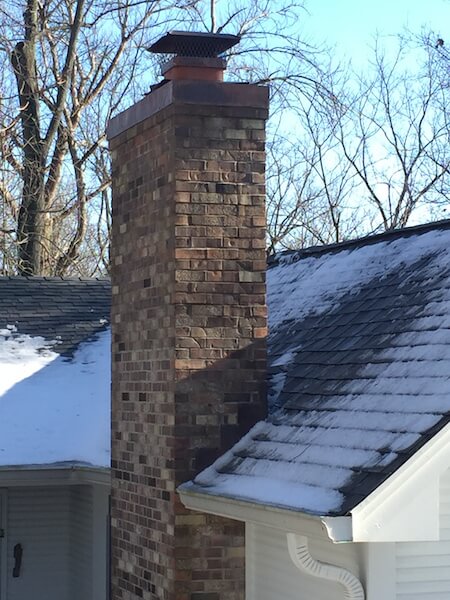
Is it Hard to Remove a Chimney?
For the record, before we get to the answer, chimney removal does not consist of a couple of guys, with sledge hammers, having at your chimney, and taking care of business – not with Brick + Ember Outfitters, anyway — we speak for no one else here.
In all seriousness though, chimney removal is generally not an ideal fix to chimney problems, if that’s the motive here, so the first question regarding any chimney removal would be, “why?”
No, it’s not “difficult” it’s a question of semantics
Chimney removal can actually create a larger amount of work to be done for the homeowner.
Unless the chimney is solely used to exhaust the furnace, there will need to be a great explanation to why the fireplace in the living room is not functional. If the chimney is torn down or removed and a fireplace exists on the interior of the home, it could jeopardize the closing of a home, if the buyers had interest in the functionality of the fireplace.
Newer furnaces are able to be redirected to exhaust out of the basement, so again if the chimney is simply being used to exhaust a furnace, then by all means, chimney removal is a great solution.
Post chimney removal, Brick + Ember Outfitters can simply re-roof over the area where the chimney was located, or install a stack-pipe to reduce masonry-related chimney problems or issues, while still safely exhausting the gases from the furnace, up and out of the home.
Note: a chimney often serves to exhaust both the furnace and the fireplace.
Give us a call for an appointment to receive an assessment and an estimate for chimney removal/solutions.
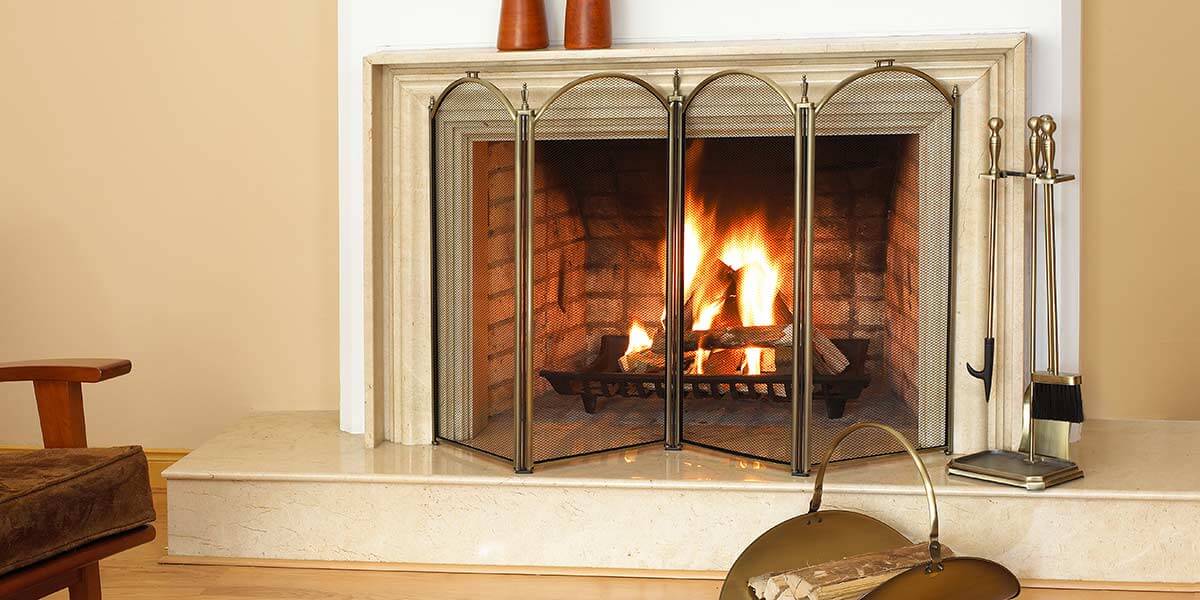
Does Your Chimney Smell?
Homeowners will occasionally call in to inquire about smells coming from their chimney. The chimney is designed and constructed to pull air up and out; however, there are a few common reasons you may be experiencing what industry professionals refer to as a drafting issue: when air is coming back in through the chimney and bringing bad smells into your house.
It is extremely important to have any drafting issues addressed, as the fireplace is often not the only component of a home that uses the chimney. Other heat systems, such as the furnace and water-heater, are also exhausted through the chimney. If the air is coming back down the chimney rather than out, the natural gases from those systems may be as well.
Causes of Chimney Drafting Issues:
Cause: Build-up of creosote or soot in the chimney’s flue system can cause a downdraft in the chimney.
Solution: Chimney Sweep & Inspection.
It’s a great idea to have your chimney inspected if you’re experiencing bad smells and stinky downdrafts. If the problem is a simple buildup of soot or debris in your flue system, an inspection and a good chimney cleaning should get your problems sorted out.
Cause: Holes in the chimney’s flue system (between flue-tiles or throughout the liner) can also be a cause for drafting issues.
Solution: Assessment of the Flue System (tiles or liner).
If your flue system is full of holes, it’s no wonder that you can’t control the drafts that are coming through your chimney. Call in a professional to examine your flue network and inspect it for holes. Once you know the exact situation, repairing your chimney flue should be a straightforward process, and your air will be fresh again in no time.
Cause: Missing Rain-Caps.
Solution: Assessment & Rain-Cap Installation.
Rain-caps are small, tower-like covers for your chimney that let smoke and air escape from inside the house, while keeping debris and water outside. Without rain-caps, it’s much easier for debris to block up your chimney or stray gusts of wind to force their way down the flue and into your home. If your chimney isn’t protected by a rain-cap, consider purchasing one. It could be a big improvement to the smells and drafts in your home!
Cause: Large trees directly above the flue or top of the chimney.
Solution: Assessment & Trimming of Trees.
If trees are looming over your flue and not letting air escape upwards, it makes sense that the air would go back down instead. Inspect your trees—either on your own or with the help of a professional—and consider trimming them enough to open up the chimney flue again.
Cause: Wind circulating from larger homes or trees that surround your home (mountains can also cause this to happen, but we’re in central Indiana, so..).
Solution: Assessment of the height of the flue.
If you think nearby wind circulation might be your problem, call in a professional to assess the height of your chimney’s flue. They will help you determine whether or not that really is the cause of the problem, and if so, how your flue might be altered to reduce those drafts.
It’s really not ideal to be having a down-draft coming from your chimney, so take a quick smell of the rooms in which fireplaces are located, and give us a call if it smells smokey, or musty, or just strange (please ensure there are not live animals or critters in there first; we don’t work well with live animals!).
For any other chimney concerns, reach out to us today!
What Causes Creosote?
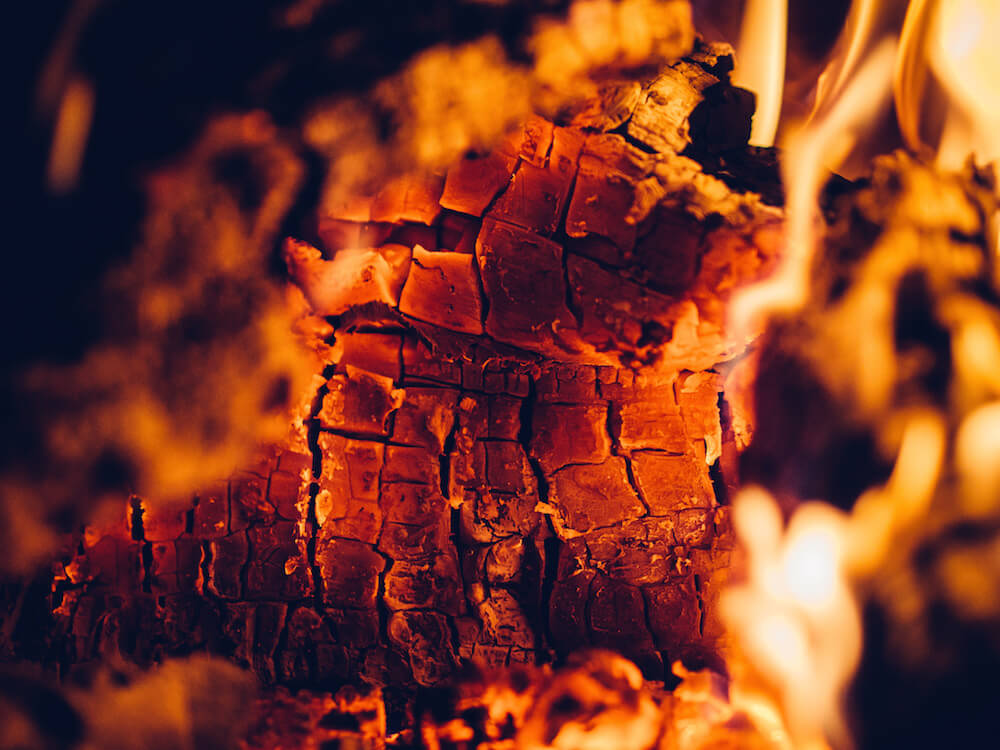
Simply put, creosote is the by-product of burning wood.
The chimney serves to exhaust the by-products of combustion or fires that are had in the fireplace. The chimney also serves to create breathability in the home — yes. The majority of the rest of your home, as far as you know or would have it in a perfect world, are air-tight when not opened (windows, doors, etc.), so the gases from the furnace and the healthy circulation of air is helped along by the chimney (drawing air up and out of the chimney).
The by-products of combustion, or a fire, include water vapors, gases and other unburned particles, be it wood, cardboard, or documents that no one should ever find. It will obviously be cooler as those by-products are drafted up and out he top of the chimney and as they do they begin to stick to the walls of the chimney’s flue system. The residue that is left behind is what we call creosote. Sounds harmless and normal, but that tar-like substance can harden and is actually highly flammable.
The folks over at the Chimney Safety Institute of America also let us know that a restricted air supply, unseasoned wood, and cooler than normal chimney temperatures are all factors that can accelerate the buildup of creosote on chimney flue walls (whether those are clay flue-tiles or a stainless-steel liner). Reignited creosote is extremely dangerous and can cause chimney fires, leading to structural damage with potentially catastrophic results (serious injury or death). We don’t mean to sound fatalistic here, but the reality is a chimney that has not been swept and inspected annually is a huge liability to the safety of your family and friends.
It is recommended by industry professionals to have the chimney swept and inspected at least once annually – if you have not had the chimney swept or inspected yet this year, give us a call at Brick + Ember Outfitters. All of our sweeps have been certified by the Chimney Safety Institute of America.
Haven’t had your chimney swept or inspected? Give us a call!
The Second Best Time to Sell a Home and How to Make it Sellable!
Autumn - there is something refreshing about the crisp morning air and the colors of Autumn - oh! And it cools down, which at this point, no one is opposed to, as far as we know. We’ve come to learn that Autumn also happens to be the second best time of the year to sell a home - fancy that, right?

5 Tips for Adding Value to Your Transactions
A recent read for us here at Brick + Ember Outfitters, “101 Things Everyone Should Know About Real Estate Investing” by Seth Williams.
We picked five tips from the list of 101 tips, mainly because 101 would be insane right now! Given your time allowances as an agent we’ve got to keep you moving…
1. Collaborate. Find great team members to help you pull off your overall vision. One person alone can only handle so much (and it limits your education). - Ken McElroy
B+E: We’d like to be a part of your team. Inspection Reports are an inevitable facet of your job - they come, and we know chimney or masonry related issues are brought to the attention of your buyer/seller. We’re here to collaborate, and to do what needs to be done. Whether that’s an estimate for repairs, or carrying out what needs to be done to close the sale of the home.
2. Be fanatical about due diligence. Try to obtain and confirm every bit of information you can about an investment — not just the physical property but the history and potential future of revenue, operating expenses, and capital costs. - Frank Gallinelli
B+E: A great example of this would be knowing whether the fireplace is functional and safe, or not. A fireplace can be a great selling point, whether it works or not, and what it could cost to repair could help with potential buyers (those who want it to work, versus those who don’t mind either way). Give us a shout if you’re not sure, we’ll clean, inspect, and report back to you about the fireplace/chimney safety and functionality!
3. Don’t take shortcuts in your repairs and updates. Shortcuts will end up costing you money in the long run when a prospective Buyer’s offer comes in lower than anticipated or when their inspections reveal poor workmanship in the property you’re selling. Don’t let your properties be known as the gal/guy who delivers shoddy properties. - Lynn Pineda
B+E: Well, that’s pretty cut and dry. Your confidence in the transaction is the strength of your buyers/sellers. Your reputation with those homeowners, post sale, will be your strength in the market - that’s how word-of-mouth works.
4. Don’t be afraid to ask for help. There are so many details in real estate that it can be overwhelming. One of the great things about experienced investors is that they have all been in your place. Turn to more experienced investors with your questions, as there is no such thing as a stupid question. - Joshua Dorkin
B+E: Brick + Ember Outfitters is glad to be of any assistance when it comes to any chimney or masonry related concerns listed on those Inspection Reports - don’t stress the numbers, we can get those to you! Send over the Inspection Reports via email (with plenty of details), and we’ll see what we can do!
5. Relationships. In the world today everything is very fast-paced/cut and dry. Everyone is just trying to get the job done and make money. This method may get things done quickly, but it doesn’t necessarily ensure quality. By taking your time and focusing on building relationships you can eliminate the ones looking for a quick penny and only work with people who genuinely have your best interest at heart. - Engelo Rumora
B+E: Brick + Ember Outfitters is listed on MIBOR, Tucker Home Services, and regularly attends Tucker luncheons with agents. We are a service provider that is committed to building equity, restoring beauty and growing peace of mind. We want you to know that we’re here to keep things moving, and to build genuine relationships with agents and homeowners, alike. At the core of each of our respective services are people. We once read it in Go-Givers Sell More, “You want good people skills? Be a person.” Great customer service skills are a key differentiator for any business man or woman.
As you head into the Fall/Winter season, the greatest skills you will bring to your transactions with clients will be those which add-value to them. Brick + Ember Outfitters wants to partner with you to make those transactions as seamless as possible. Send us a detailed inspection report and we will do our best to provide you with a rough estimate for the necessary repairs, no more, no less, within 24-48 business hours. If we are required to come out to visually assess the called-out parts of the estimate, it’s just $50!
Build a strong brand, be a great agent - we’ll grow piece of mind together.

How Often Do I Need a Chimney Sweep?
The chimney exhausts the fireplace and the furnace of your home. The efficiency of your chimney can affect both the burn of the fire in the fireplace and the flow of carbon monoxide out of your home. Regardless of whether or not the fireplace is used, a sweep and inspection should be performed annually in order to ensure the safety and functionality of your chimney. Unwanted critters can find there way into the chimney flue system, and weathering (especially Indiana winters) can cause deterioration to occur to the masonry of your chimney, leading to inefficient or unsafe burning conditions. A chimney sweep and inspection is recommended to be performed annually by industry professionals. When wood is burned in the fireplace a tar-like substance is left behind called creosote. Creosote is a flammable substance that can lead to chimney flue-fires, ultimately cracking flue tiles and allowing the fire to reach structural components of your home. The chimney sweeps at Brick + Ember Outfitters have been certified by the Chimney Safety Institute of America, tested and approved to sweep and inspect your chimney in accordance with industry regulations and safety standards.
If you have not had your annual chimney sweep performed, feel free to give us a call to schedule your appointment, or click HERE.
Do I Need a Chimney Sweep
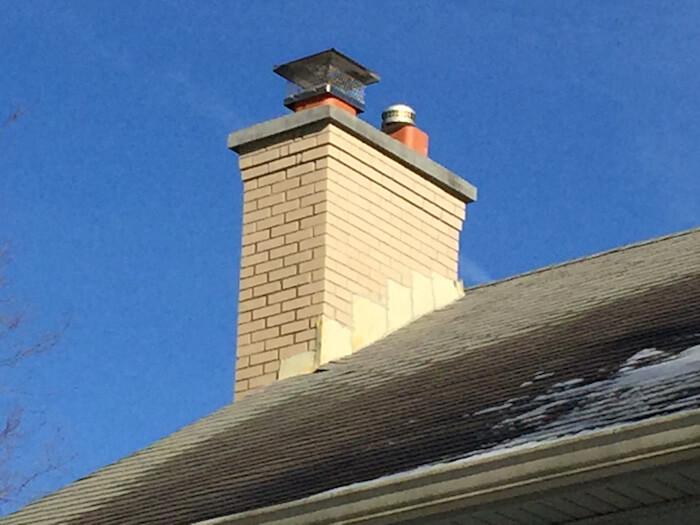
Contrary to many homeowner’s assumptions, whether or not you need a chimney sweep is not relevant to the use of your chimney/fireplace. Your chimney serves to exhaust your fireplace and in many cases, the furnace too. When a chimney is not in use birds, insects, and other unwanted critters can take up real-estate in your chimney. You’ll want to have any remnants left by these guests removed and any damage addressed. Additionally, Indiana weather takes a serious toll on the masonry and the internal components of a chimney. The freezing and thawing, expanding and contracting of water in any deteriorated mortar joints, or porous brick, will perpetuate the breaking down of your chimney’s structure.
If the chimney is used, it is absolutely recommended by industry professionals to have the chimney cleaned and inspected annually. When wood is burned, creosote is left behind, and a fire burning inefficiently (not hot enough) allows creosote to build up in the flue system. Creosote is a flammable tar-like substance that can re-ignite and lead to flue-fires which crack flue-tiles and cause serious structural hazards for your home.
A chimney should be swept at least once annually by a certified chimney sweep. Your Chimney Outfitters have been certified by the Chimney Safety Institute of America to ensure that you receive a quality sweep and inspection service that is aware of chimney safety regulations and best burning practices.
If you have not had your chimney swept or inspected this year, feel free to give us a call to schedule your appointment or click HERE.

How Much Does It Cost For A Chimney Sweep?
How much a chimney sweep will cost is a bit of a loaded question and the answer is sort of relative. We’d say it really depends on what constitutes as a sufficient chimney sweep. The average range of a chimney sweep service can be anywhere from $99 - $199. This can vary based on the services included. For instance, a simple chimney sweep (the literal cleaning of the chimney flue) may remove creosote or other hazardous build-up, but there is no indication of what is occurring in the liner/flue system. At Brick + Ember Outfitters our chimney sweep services always include a camera inspection. It is our responsibility to help ensure the safety and functionality of your chimney, we would find it rather silly to leave your home having not informed you of any unseen deterioration or concerns that may not be seen by simply looking into the firebox or at the top of the chimney. Our Chimney Outfitters’ are certified by the Chimney Safety Institute of America, tested and approved by an examination concerning the industry regulations for safe chimney/fireplace function and use.
Interested in a chimney sweep and camera inspection? Give us a call to set up an appointment, or click HERE.