
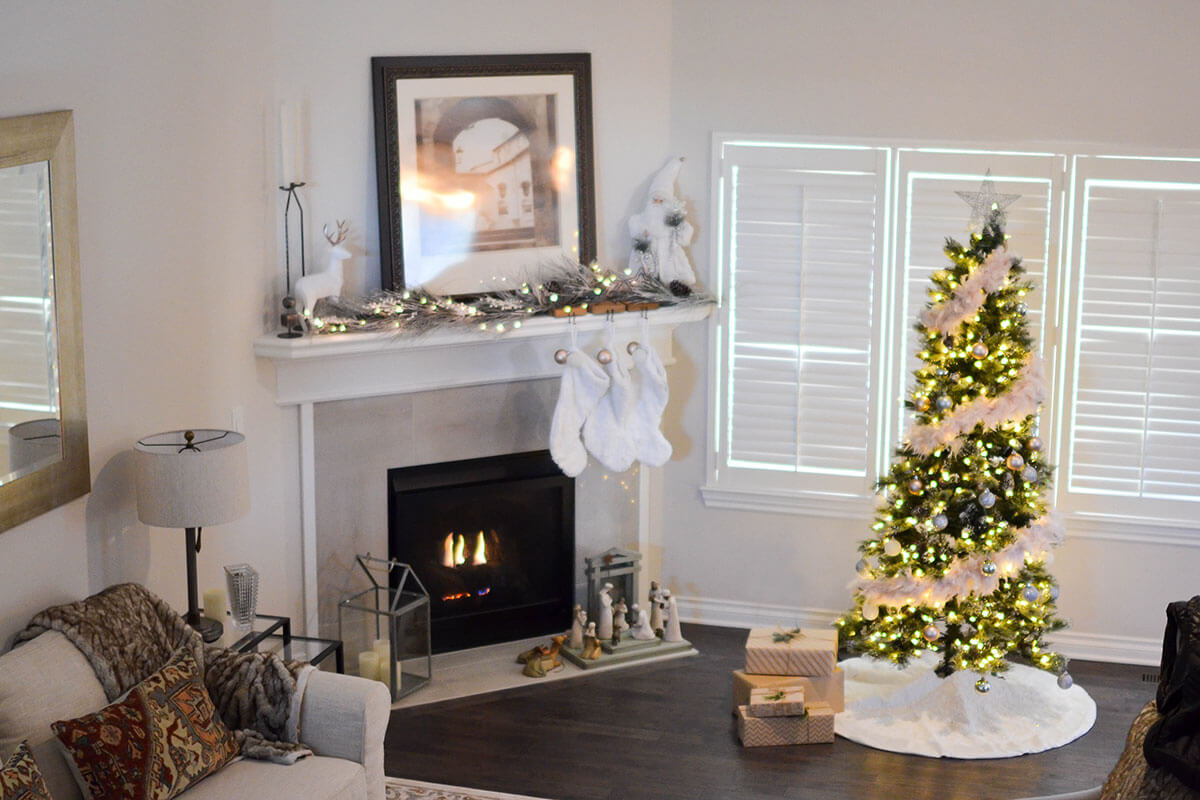
Fire Safety Tips for the Holidays
From holiday candles to Christmas trees, dangling garlands and fireplaces, seasonal decorations can often be hazardous if not properly put up with care, or if it’s placed next to a potentially dangerous item. Follow our fire safety tips to keep your holidays safe for you, your family and your guests.
-
Inspect your lights before hanging
Don’t plug more than 3 strings into each other, throw out light strings that are worn or broken, and be sure to always unplug the lights before leaving the house or going to sleep.
-
Keep your Christmas tree healthy
Water it every day because dry needles and wood catch fire more easily. Just two or three days without water is enough to dry it out.
-
Place your Menorah or Kinara safely
Keep flammable items, including curtains and holiday decorations, at least 3-feet away from your candles. Place your menorah or kinara on a non-flammable surface to catch the melting candle wax, such as a tray lined with aluminum foil. Never leave lit candles unattended.
-
Use space heaters with care
They should only be used as temporary heating, should never be used with an extension cord, and should be plugged into a 20-amp circuit. Keep away from Christmas trees, because according to the USFA, heat sources too close to a tree account for 20 percent of Christmas tree fires.
-
Prepare your fireplace before lighting logs
Keep flammable items, such as wrapping paper (burning gift wrap is extremely dangerous), rugs and clothing, at least three feet away from your fireplace flames. Use a fire screen to keep embers and logs from escaping, and make sure all embers are fully extinguished before you turn in for the night.
Facts about home holiday fires
- One of every four home Christmas tree fires is caused by electrical problems.
- Although Christmas tree fires are not common, when they do occur, they are more likely to be serious. On average, one of every 32 reported home Christmas tree fires results in a death compared to an average of one death per 143 total reported home fires.
- A heat source too close to the tree causes one in every four Christmas tree fires.
- The top three days for home candle fires are Christmas, New Year’s Day, and Christmas Eve.
- Candles start two out of five home decoration structure fires.
Keep your holidays merry and bright by making these fire safety tips a priority during this festive season. Call or visit our website us to learn more about how to keep your home and family safe with annual chimney and fireplace maintenance visits.


What is the cost of a chimney inspection?
Whether you're burning logs or firing up the gas fireplace, chimney maintenance should be a top priority every year. Standard and basic chimney inspection costs vary depending on roof accessibility and the type of chimney you need inspected, but generally speaking you can plan to spend about $100 to $250.
Chimneys left unclean are a leading cause of structure fires, according to the National Fire Protection Association, which recommends an annual chimney inspection.
Different types of chimney inspection
- Inspection and cleaning
Chimney inspection costs vary depending on roof accessibility and the type of chimney to be inspected, but generally speaking these services will run anywhere from $100-$250. - Camera inspection
A camera chimney inspection cost, much like you would expect from a plumber inspecting clogged pipes, will typically be $50-$75. However, here at B+E, we include a camera inspection with all chimney sweeps, so you’re getting a two-for-one!
- Weather damage inspection
Following a major weather event, it’s a good idea to get a more thorough inspection of your chimney that includes the roof and attic. Special video equipment and other additional resources are often needed to properly determine if the structure is still sound. This service is typically an additional, separate fee that can only be determined once the scope of damage is assessed.
- Masonry repairs
If a visual inspection of a chimney reveals that some areas of the masonry are in need of repairs, a professional chimney mason can do tuck pointing which offers a great solution for cracks and breaks.
- Fire Damage
The cost for a chimney inspection for a chimney that has been damaged in a fire depends on how many stories the home has. A single-story home and a home with two or more stories will have significantly different prices.As a whole, chimney inspection costs for more serious damages and issues vary greatly on a wide range of factors. The best way to determine the most cost effective way to address any issues your home may have is to call local chimney and masonry company for an estimate specific to your needs.Chimney inspections should be done by professional chimney cleaning certified by the Chimney Safety Institute of America who will correctly ensure that your chimney is clear of creosote or other obstructions that could catch fire or prevent the smoke and other gases from venting outdoors. Don’t be fooled by the scammers out there. And trust us…they’re out there.
How to avoid chimney scams
- Don’t fall for “too good to be true” pricing: A legitimate company won’t take a ladder off the truck for $49.95. Then figure in equipment, payroll, liability insurance, gas, etc.
- A picture is worth a thousand words: Nowadays, chimney sweeps are trained to take pictures from start to finish, so don’t just take their word for it. Ask for visuals.
- Don’t get pressured into acting fast: Professionals don’t use scare tactics.
- Do your homework: Check reviews on Google, Facebook and Angie’s List.
Are you in need of a chimney inspection cost estimate? Give us a call or visit our website us to schedule a visit from one of our Outfitters!
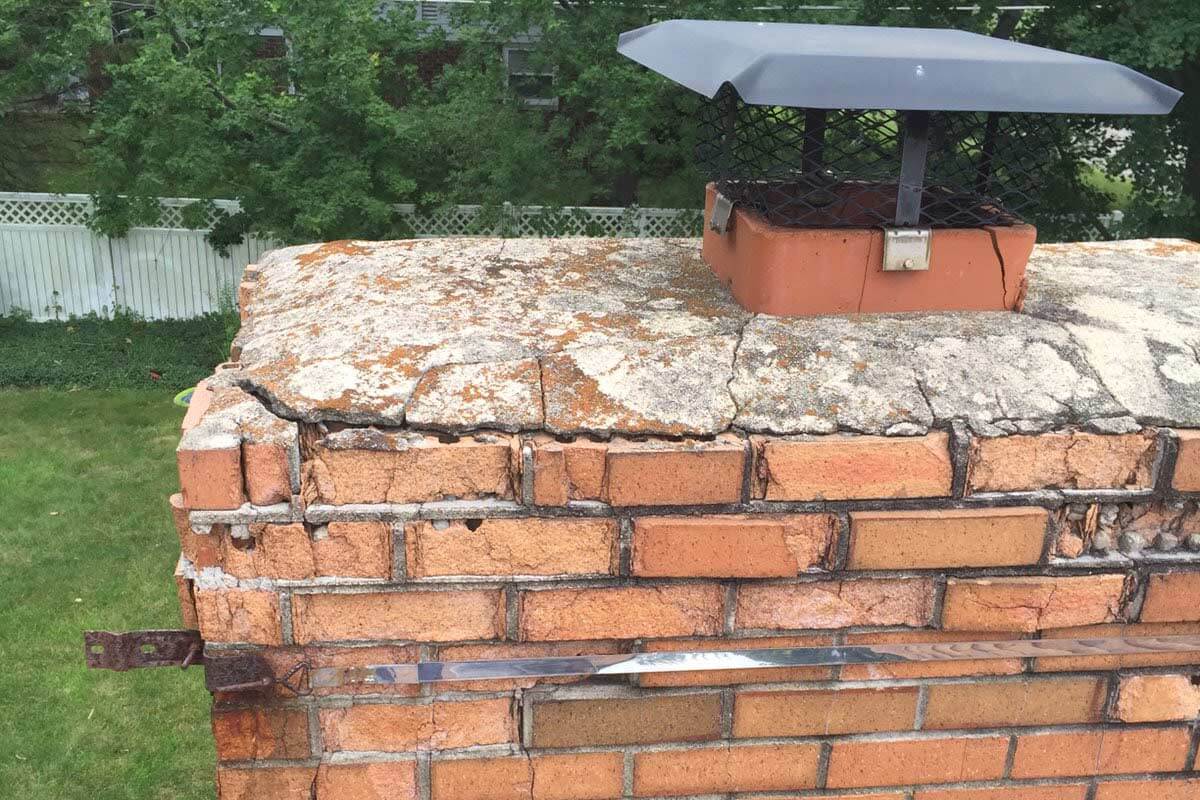
What is a chimney inspection?
A chimney inspection is a service performed to look for buildups and blockages, followed by sweeping to remove problems inhibiting performance. In this article, we will outline what is involved in a good chimney sweep, as well as the three different levels of a chimney inspection that are available to you.
A good chimney company certified by the Chimney Safety Institute of America, will include these elements (and more!) within their chimney inspection:
- Rain Caps: highly recommended to prevent moisture from snow and rain to get down into your chimney, as well as birds and other critters.
- Brick and Mortar: important elements to take a close look at in every inspection to evaluate if any bricks exposed to weather need to be re-set, or if the mortar needs repointing.
- Flue Liner: cracked flue tiles and excessive creosote buildup would need attention, and if the chimney hasn’t been swept recently, they will recommend that it be cleaned before your first fire of the season in order to prevent unsafe consequences to wood-burning fireplaces, such as chimney fires.
- Fireplace Blower: these parts unfortunately do not have a filtering system to prevent buildup of dust and hair on the blower. Excessive buildup will shorten the life of this part and can even be a fire hazard.
Levels of chimney inspection
- Level One:
This level of a chimney inspection is recommended for a chimney that is under continued service, under the same conditions, and is with the continued use of the same appliance. If your appliance of venting system has not changed and you plan to use your system the same ways you have in the past, this level should be your base minimum action. - Level Two:
This level of a chimney inspection is recommended for a chimney that has had changes made to the system. These would include its shape, material, fuel type of flue. This level of chimney inspection is required upon the sale of a property, or following an operation malfunction or even that could have caused exterior damage to the chimney. - Level Three:
This level of chimney inspection is recommended for a chimney where a removal of a particular component of the building or chimney is necessary. This level of chimney inspection included everything that would be checked in a Level 1 and Level 2 inspection.
“I’m sure we’re fine for another year…”
If you choose to skip a chimney inspection or simply forget, you face the risk of running into all sorts of problems. These problems have the ability to cost you thousands of dollars in damagers, or could result in injury or death to those inside the home as well as neighbors. Residential fires are not something to be taken lightly, and the lack of regular chimney inspections is a very common cause of house-fires.
Prevent problems with an annual chimney inspection.
Call or visit our website us to schedule yours before you start using your fireplace on a regular basis this winter.
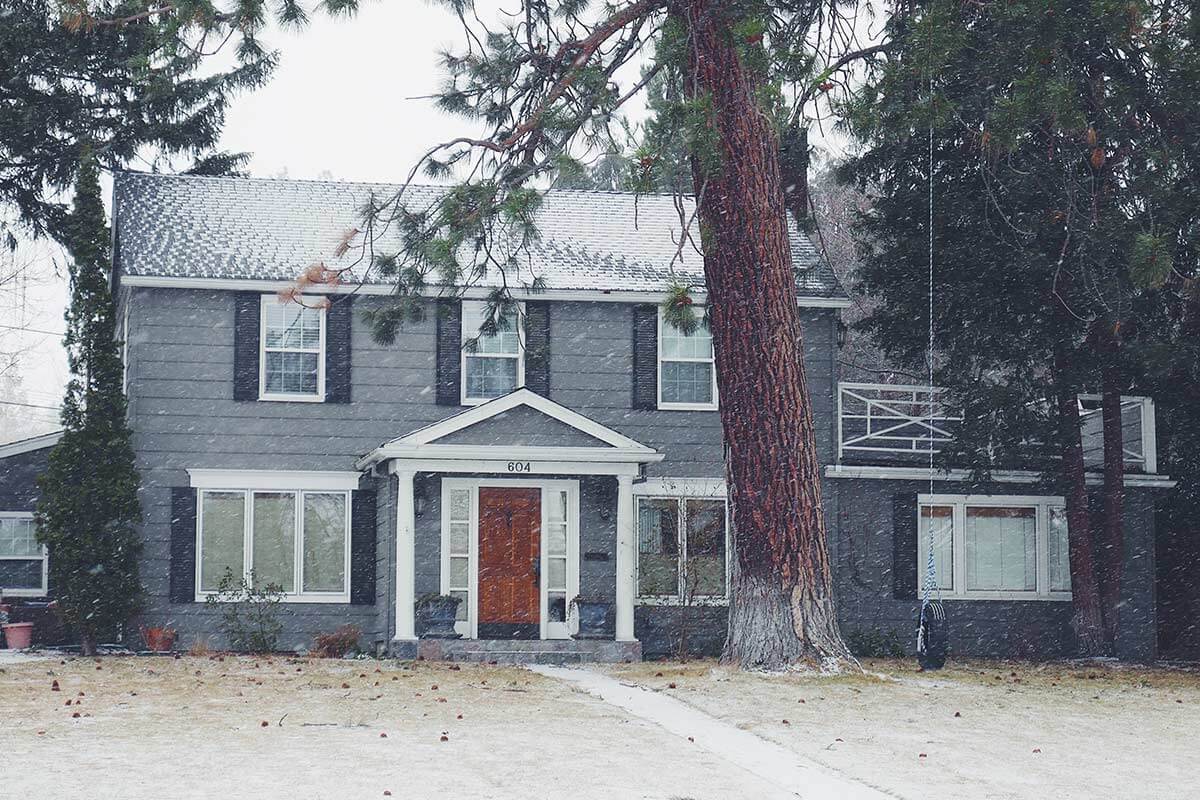
How the Freezing and Thawing Cycle Can Affect Your Chimney
The freeze/thaw cycle can cause significant damage to the bricks and the mortar of your chimney. Indiana weather can be all over the place sometimes, and although those surprise warm and sunny days we get in the middle of February are nice, did you ever stop to think what that nice, warm weather is doing to your chimney?
What is the Freeze/Thaw Cycle?
When you can see the snow melting off trees and hear the dripping of water off your roof, the precipitation gets into the porous surface of your mortar or even into the surface of bricks, then pools in the pores and stays there. When the weather freezes, that water freezes as well, and when water freezes, it expands which causes those pores to get bigger. When the weather warms up, the ice thaws, and there is room for even more water to collect. As this cycle continues, the pores get bigger and bigger, and this can cause major structural damage to your chimney, and proper maintenance is highly recommended.
Left unrepaired, the cracks of crumbling mortar, water-stained walls, rusted chimney damper or cracked chimney crowns, can lead to more costly damage to your chimney and home. Water can penetrate your chimney’s interior or even compromise other aspects of your home’s structure. Knowing this, the best way to handle chimney damage is to recognize it quickly and have it repaired immediately by a professional chimney company certified by the Chimney Safety Institute of America. This will highly increase your changes of preventing further deterioration.
If you are wondering how the freeze/thaw cycle has affected your chimney give us a call or visit our website us to schedule a visit from one of our Outfitters! Our CSIA-certified chimney technicians will apply a waterproofing formula to your entire chimney that creates a barrier against water penetration so that the freeze/thaw cycle will not occur.
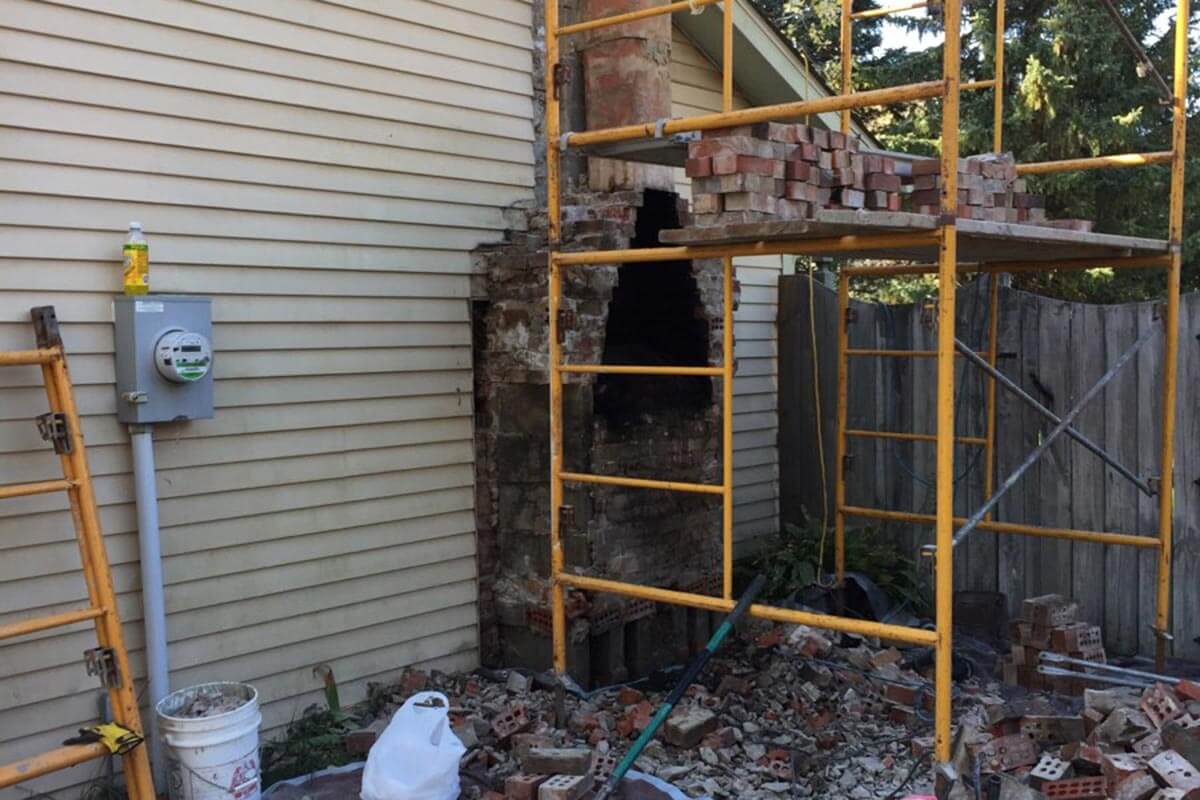
Will Homeowners Insurance Cover Chimney Repairs?
When it comes to homeowners insurance covering chimney repair, there is good news and bad news. The good news is, damage that occurs as a result of a sudden, unexpected incident will usually be covered. The not-so-good news is that any damage resulting from normal wear and tear is typically never covered. To determine if you can claim the damage on your chimney, you must understand how your insurance policy offers coverage and we will help by outlining some common claims that are covered, some that are not, and tricks to increase your odds of homeowners insurance chimney repair help.
The two most popular cases we see when homeowners insurance covers chimney repair are:
- Chimney struck by lightening: The chimney (especially the chimney crown) is often the highest point of your house, and many chimneys are capped with a metal mesh of some kind. These can attract lightning, which damages the chimney.
- Chimney fire occurs: Chimneys can also be damaged from within, if a fire escapes the firebox and chars or cracks the interior of the flue.
What these two events have in common is that they are both sudden and unexpected. Though you should have coverage for damage from any of the listed or non-excluded perils in your policy, these tend to be the most common.
When will homeowners insurance NOT cover chimney repairs?
Your insurance will not typically get involved with issues due to the normal wear and tear of your chimney. Chimneys must be cleaned and maintained regularly to stay in proper working condition. Without proper maintenance, you may not even discover minor damage like flue cracks. If not repaired, minor damage can get worse and become a major expense to repair later on. Homeowner's insurance for chimney repair excludes damage from lack of routine maintenance and normal wear and tear. Since many types of chimney damage occur with the normal passage of time, or because you didn't maintain the chimney properly, many chimney claims get denied.
Claim Tips and Tricks
Although a homeowners’ insurance policy is all in writing, there is definitely some wiggle room on determining what will be covered and what will not, and this includes matters related to chimneys. Here are a few insider tips regarding chimney-related claims that have the ability to get paid, but easily may not have been:
- If you have a claim-free history, have been with the insurance company for many years, and you have packaged insurance.
- If a homeowner is rather unreasonable and pushy and refuses to give in to claim denial. This can create the sense of being too much hassle for the insurance company; so they pay.
- If there is no solid proof that a sudden and unexpected event did not occur.
Ultimately, the final decision regarding you homeowners insurance chimney repair scope and when your chimney needs repair is determined by your insurance policy, the company you are insured with, and the agent you work with on a claim. Your chimney is an often overlooked, but an extremely important component of your home. It is responsible for safely exhausting the fireplace, as well as the gases from your heating systems. Wondering if your chimney is in need of repairs? Call us at 317.500.1250 for a maintenance check-up or request an appointment today!
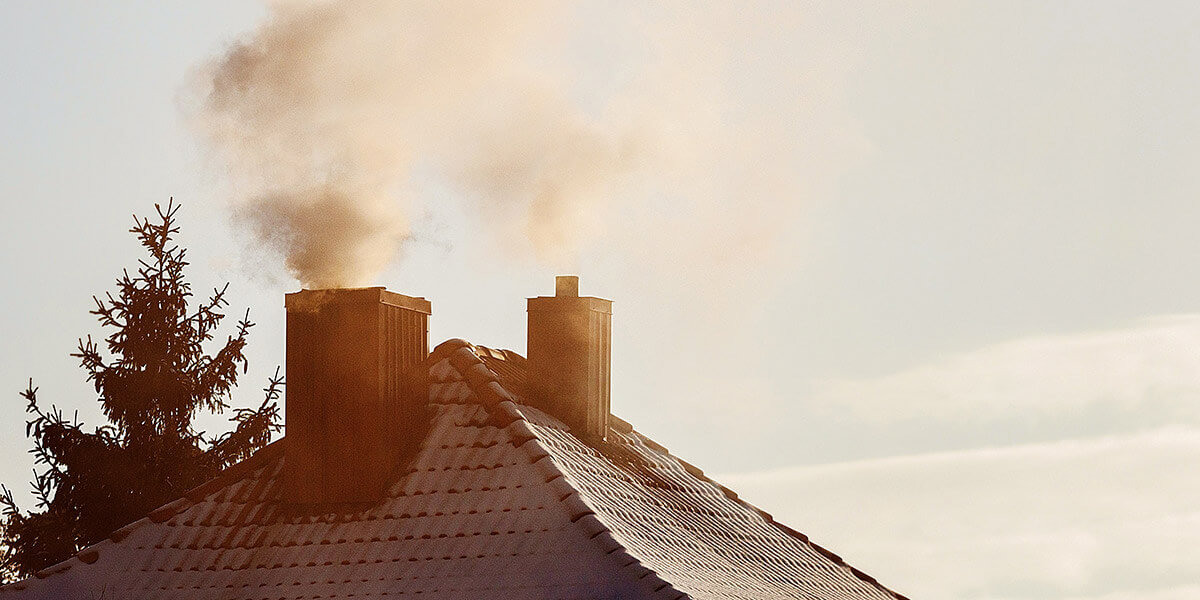
When Is Chimney Removal Necessary?
For the record, before we get to the answer, chimney removal does not consist of a couple of guys with sledgehammers pounding away at your chimney. Not with the professionals at Brick + Ember Outfitters, anyway. We’re just speaking for ourselves – that is certainly not the best and most safe way to conquer this type of project.
In all seriousness, though, chimney removal can actually create a larger amount of work for the homeowner than for the contractor.
If the motive is removal due to chimney problems, that is generally not the ideal solution. The first question you are going to hear professionals ask if the request is removal is simply: “WHY?”
Unless the chimney is solely used to exhaust the furnace, there will need to be a great explanation to why the fireplace in the living room is not functional. In the event of putting a house on the market, if the chimney is torn down or removed and a fireplace exists on the interior of the home, it could jeopardize the closing process of a home sale. This is especially the case if the buyers had interest in the functionality of the fireplace.
Newer furnaces can be redirected to exhaust out of the basement, so pretty much only if the chimney is simply being used to exhaust a furnace should chimney removal be your solution.
Upon chimney removal taking place, chimney and masonry professionals can easily:
1. Re-roof over the area where the chimney was located
2. Install a stack-pipe to reduce masonry-related chimney problems or issues
…all while still safely exhausting the gases from the furnace up and out of the home. An important fact to note is that a chimney often serves to exhaust both the furnace and the fireplace.
If you’re wondering what the best solution is for your chimney, we are here to help talk you through the best options for your home. Call us at 317.500.1250 for a maintenance check-up or request an appointment today!
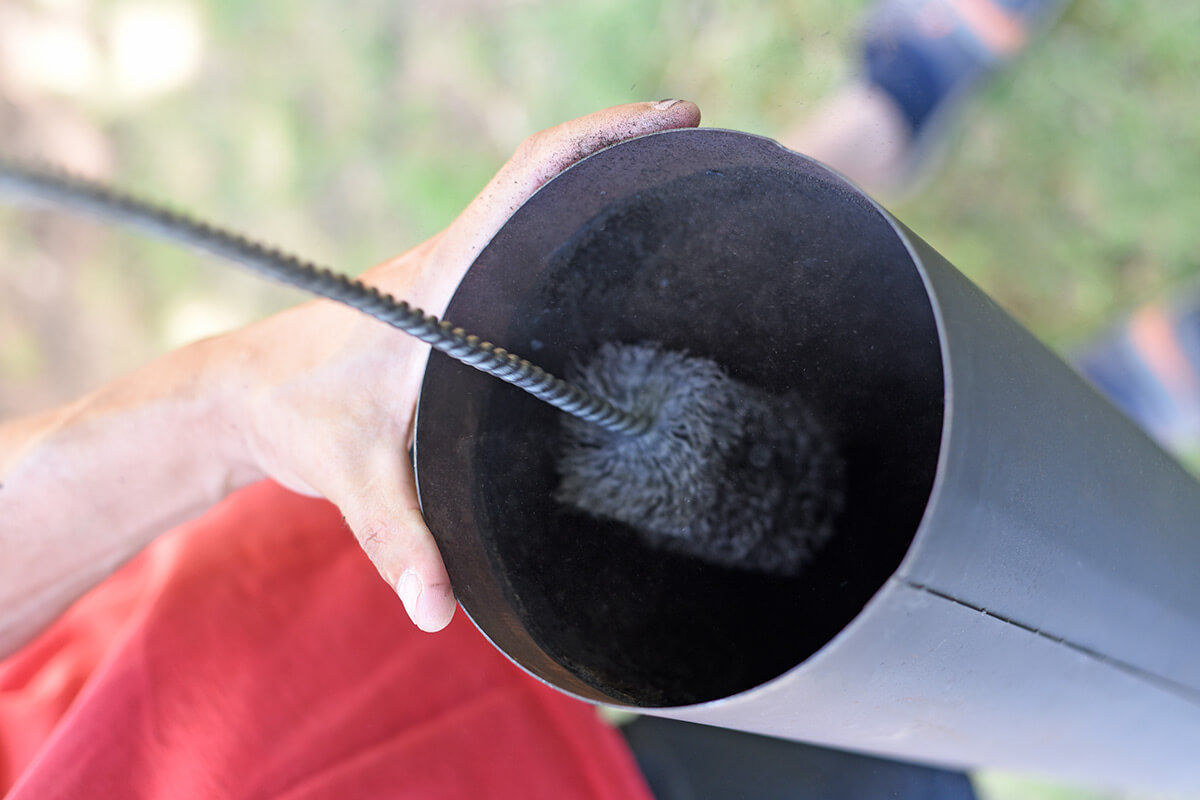
When to Call in a Chimney Sweep for Help
As we approach the cold winter months, many people are wondering when a good time to call a chimney sweep may be. In short: now. Before you start using it on a regular basis. As a general rule of thumb, we recommend hiring a chimney sweep once a year, and in this post we will help you understand why this important for your home and for your safety.
Chimney Sweep Responsibilities
The job of a chimney sweep is to remove blockage, soot, and built-up creosote from your chimney liner, damper, firebox and smoke chamber. This type of cleaning will help create a safer operation of your system. It only takes a little accumulation of creosote glazing to create the potential for a chimney fire, and that build-up can also reduce the draw of the fireplace and reduce efficiency.
The Chimney Safety Institute of America recommends that open masonry fireplaces should be swept at 1/8" of sooty buildup, and sooner if there is any glaze present in the system. This is considered to be enough fuel buildup to cause a chimney fire capable of damaging the chimney or spreading to the home.
When to call a chimney sweep for help
- If you haven’t had your chimney inspected in a year or more
- If you are having any performance issues with your chimney, fireplace or heating system
- If you have recently purchased the home
If you have not used your fireplace in a long time, pests may have built nests that could clog your flue or chimney chamber. Winter freeze cycles and moisture combine to take an annual toll on masonry and liner materials too.
Why should you have a chimney sweep come every year?
- Fire Prevention: A smoky fire without enough oxygen emits lots of unburned tar vapors that can condense inside the fireplace flue and stick to it, possibly leading to a chimney fire.
- Energy Saving: Keeping your heating system clean helps it operate more efficiently, and helps stretch your home’s energy dollars.
- Pollution Prevention: Operating your combustion appliance most efficiently, whether it is a woodstove, fireplace, pellet stove or furnace, helps reduce the amount of smoke it will generate. Regular maintenance, including chimney sweeping, is important to keep certified stoves and other heating appliances operating at peak efficiency.
- Save Lives: Every winter, we hear or read about tragedies occurring when people are poisoned by carbon monoxide due to blocked or faulty flues. Thankfully, regular inspection, cleaning and/or repair can prevent these accidents.
In summary, don’t wait. Waiting almost always results in additional repairs, and unfortunately sometimes in property loss. Every year in the United States, homeowners lose over 200 million dollars as a result of continuing to use unsafe systems. Call our team of chimney sweep professionals at Brick + Ember Outfitters: 317.500.1250. Staying on top of your systems is not only the smartest and safest choice, it ends up being the most cost-effective too.
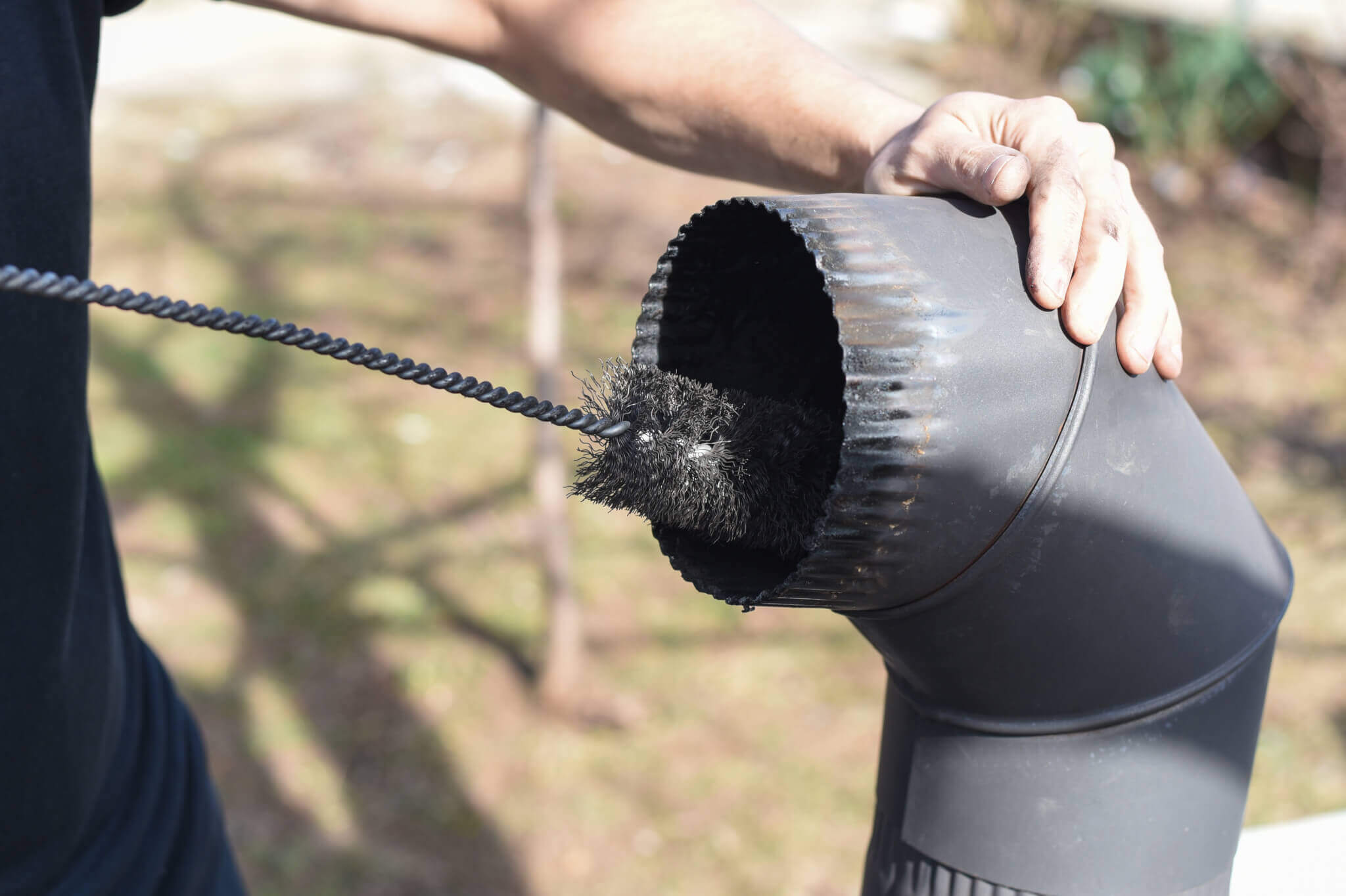
What Causes Creosote?
Simply put, creosote is the by-product of burning wood.
And simply put, the cause of creosote is from smoke, water vapor, gases, unburned wood particles, hydrocarbon, tar fog and minerals that all go up into the chimney to exit the home. These particles are hot when they rise, and as they rise in the cooler chimney, condensation occurs. This causes residue known as creosote to stick to the walls of the chimney.
The chimney serves to exhaust the by-products of combustion or fires that are had in the fireplace. The chimney also serves to create breathability in the home. That’s right --- the majority of the rest of your home, as far as you know or would have it in a perfect world, are air-tight when not opened (windows, doors, etc.), so the gases from the furnace and the healthy circulation of air is helped along by the chimney (drawing air up and out of the chimney).
The by-products of combustion, or a fire, include water vapors, gases and other unburned particles, be it wood, cardboard, or documents that no one should ever find. It will obviously be cooler, as those by-products are drafted up and out of the top of the chimney. As they do they begin to stick to the walls of the chimney’s flue system. The residue that is left behind is what we call creosote. Sounds harmless and normal, but that tar-like substance can harden and is actually highly flammable.
The folks over at the Chimney Safety Institute of America also let us know that a restricted air supply, unseasoned wood, and cooler than normal chimney temperatures are all factors that can accelerate the buildup ad cause of creosote on chimney flue walls (whether those are clay flue-tiles or a stainless-steel liner). Reignited creosote is extremely dangerous and can cause chimney fires, leading to structural damage with potentially catastrophic results, such as serious injury or death. We don’t mean to sound fatalistic here, but the reality is a chimney that has not been swept and inspected annually is a huge liability to the safety of your family and friends.
It is recommended by industry professionals to have the chimney swept and inspected at least once annually for many reasons, one being to help eliminate the cause of creosote. As we like to remind everyone, it’s very important to keep your chimney and fireplace in good condition.
Haven’t had your chimney swept or inspected in your Indianapolis home this year? Give us a call at 317-500-1250. All of our sweeps have been certified by the Chimney Safety Institute of America.
Why Does My Chimney Smell?
Homeowners will occasionally call in inquiring about smells coming from their chimney. The chimney is designed and constructed to pull air up and out, however, there are a few common reasons you may be experiencing what industry professionals refer to as a drafting issue – when air is coming back in through the chimney.
It is extremely important to have any drafting issues addressed, causing a chimney smell, as the fireplace is often not the only component of a home which uses the chimney. Other heat systems such as the furnace and water-heater, are also exhausted through the chimney, which means if the air is coming back down the chimney rather than out, the natural gases from those systems may be as well.
Causes of Drafting Issues Causing Chimney Smell:
Issue: Build-up of creosote or soot in the chimney’s flue system can cause a down draft in the chimney.
Solution: Chimney Sweep and Inspection
Issue: Holes in the chimney’s flue system (between flue-tiles or throughout the liner).
Solution: Assessment of the Flue System, just as tiles or liners.
Issue: Missing Rain-Caps
Solution: Assessment and Rain-Cap installation
Issue: Large trees directly above the flue or top of the chimney
Solution: Assessment & Trimming of Trees
Issue: Wind circulating from larger homes or trees that surround your home (Indianapolis mountains and peaks can also be a contributing factor).
Solution: Assessment of the height of the flue
It’s really not ideal to be having a down-draft coming from your chimney, so take a quick smell of the rooms in which fireplaces are located. If there is a chimney smell, usually smokey, we can help. Call us at 317.500.1250 for a maintenance check-up or request an appointment today!
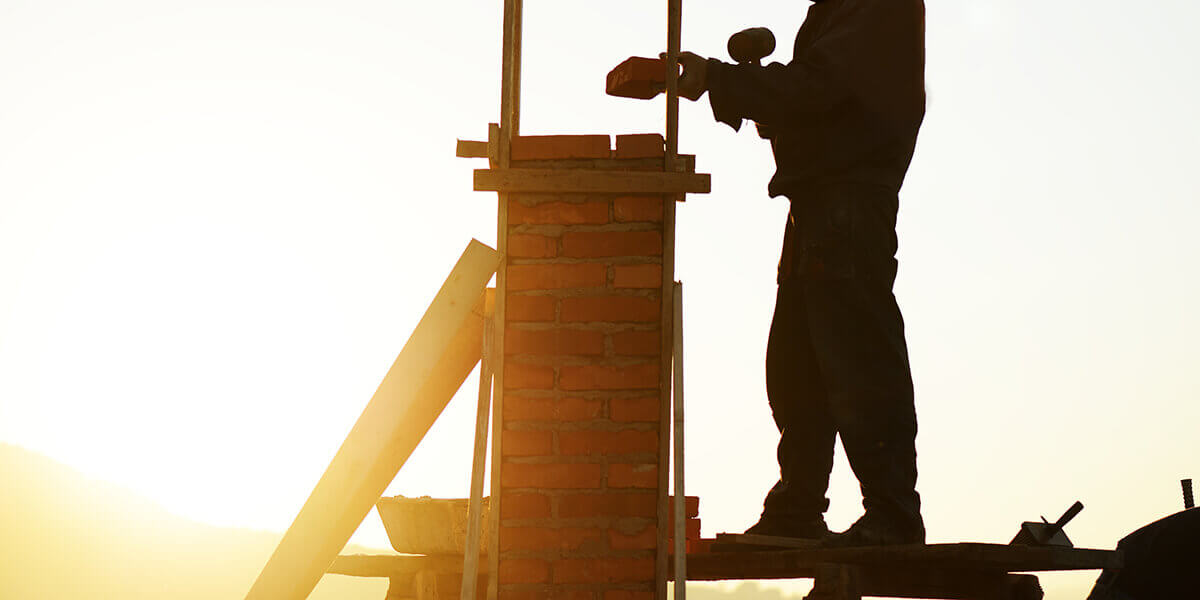
5 Reasons to Call a Chimney Sweep for Your Indianapolis Home
Regular chimney maintenance is the best way to keep your Indianapolis, IN, home’s chimney in good condition. Whether you use it often or not, your chimney should be inspected and cleaned about once a year. Between annual services, you also need to watch out for any out-of-the-ordinary occurrences with your chimney. Here are five things that should give you a reason to hire a certified chimney sweep.
1. You Heard or Saw Animals in or Around Your Chimney
If you think you have an animal in your chimney, you should call for an inspection. If the certified chimney sweep finds anything, he or she can make further recommendations as to how you should handle removing the critter from inside your chimney. Once the animal is removed, you should have your chimney swept to ensure that it didn’t leave any obstructions or unwanted materials behind.
2. You Noticed a Significant Change in Fire Quality
Clean chimneys allow for warm, beautiful fires in your fireplace. If you notice poor fire quality, a significant amount of smoke coming from the fireplace or an unpleasant odor, call a chimney sweep to have your chimney inspected. Most likely, it will need to be swept or some part of your chimney repaired before you can have anymore satisfying fires.
3. Your Damper Doesn’t Want to Open or Close
The damper opens or closes to allow air and smoke flow properly. If it is hard to open or close, it could be a sign that you need to have your chimney swept and inspected. A bad or malfunctioning damper can send smoke into the house and may not let your fire burn as hot as it should. A certified chimney sweep will be able to come out to your Indianapolis home, assess your damper’s condition and recommend further action.
4. You Noticed Creosote Buildup or Chimney Damage
While we don’t expect homeowners to do their own inspections, every homeowner should keep a watchful eye on his or her chimney. If you notice a buildup of creosote or soot inside your chimney and fireplace or you see some other kind of chimney damage, don’t hesitate to call a certified chimney sweep. Building a fire when there’s creosote build up or some kind of damage present is dangerous. If you see any potential issues, schedule an appointment before using your chimney again.
5. You Neglected Servicing Your Chimney Previously
Thousands of homeowners don’t have the recommended annual chimney sweep and inspection performed. If you’re one of the homeowners who has let their chimney maintenance fall by the wayside, it’s important to reach out to a certified chimney sweep soon. That way you can get your chimney swept and inspected before anything bad happens.
At Brick + Ember Outfitters, we want all Indianapolis homeowners to have functional, safe and efficient chimneys. That’s why we offer an $89 chimney sweep and inspection service, which is more affordable than our competitors. If you’ve paid more in the past, give us a call today.