
Do All Sweeps Accomplish the Same Thing
Your Certified Chimney Sweep can check the fireplace flue, and the furnace flue. That is a two for one, and then you are done - do not make this more complicated than it really is - it is not.
Are all chimney sweeps alike? Or do all chimney sweeps accomplish the same thing?
Great question - but no, they differ depending on the needs of your chimney and venting appliances.
There are three 'levels' to chimney sweeps:
A Level 1 Inspection is an assessment of the immediately accessible components of the chimney - inside and out. Your Chimney Sweep will address the chimney for structural stability and the connecting components between the furnace to its flue, and the fireplace to its flue. In addition to ensuring the soundness of the accessible components of the chimney, the Chimney Sweep should also be looking to address any creosote, blockages, or any other hazardous concerns prior to advising any burn to take place.
A Level 2 Inspection is required and necessary when any changes are made to the chimney system – we mean any changes - if you are not sure what may constitute as ‘any changes,’ give us a ring. As one may assume, the Level 2 Inspection is a more extensive inspection than that of a Level 1 Inspection – which includes a camera or video scan in addition to the visual inspection performed by the Chimney Sweep. A camera inspection allows your Chimney Sweep to survey and accurately address the flue-system and any related concerns which homeowner (you) would need to know about prior to burning or continuing use.
A Level 3 Inspection, without a doubt, includes the execution of both a Level 1 & 2 inspection, but also requires the removal of components or obstructions which would inhibit the Chimney Sweep from accessing a concerning or problematic area of the chimney. Removal may include, but is not limited to, a rain-cap, an interior wall, other drywall or even dampers. The Level 3 inspection would be performed because your certified Chimney Sweep has reason to believe that there is proper cause for concern.
At Brick + Ember Outfitters, all of our Chimney Sweeps are certified by the Chimney Safety Institute of America, and are readily able to perform any level of sweep necessary, per the needs of your chimney and venting systems, or order to ensure the safety and functionality of those venting systems.
We believe that educating our homeowners, is empowering our homeowners - equipping them to make informed decisions about who they request for their chimney and masonry needs. Grow some peace of mind, and have your chimney/venting systems checked for safety and functionality.

Meet Paul!
Meet Paul Johnson: B+E's Outfitter of the Month for November
 Paul has been a part of Brick + Ember Outfitters for over a year. He is one of our Chimney Outfitters, a new position that has been created as Brick + Ember Outfitters grows. He has been moved around a little bit recently and is more than willing to assist in anyway necessary to help the company succeed. He is always eager to serve everyone and pick up any slack he sees. Paul goes on all appointments related to realty and always gets them taken care of as soon as possible. Paul and his family currently reside in the Indianapolis area.

Be More Than a Pro, Be Proficient – Do Real Estate Agents Know Best?
Fall is settling in - the trees blare with colors of warm fires and the temperatures are exactly what we can expect of Indiana's transition seasons - complete inconsistency. Yards accumulate with leaves and leaves, and leaves.
As an agent you are looking to make that house the most marketable piece of land you possibly can – things slowdown in the Fall, we know, and here is a few tips that can help!
We're headed into burn season - and if that house has a fireplace - capitalize on that selling point Real Estate people!
Your potential buyers are going to notice it. The better it looks, and the more you know about the condition and functionality the more trust and marketability you will have in the sale of the home - and, if you know it needs work, you could potentially save your buyers a pretty-penny to get the necessary repairs done by move-in date.
We know it is 2016, but in a 2007 National Association of Realtors, "Profile of Buyer's Home Feature Preferences" report, the fireplace was "very important" in the decision making process when it came to house-hunting. While the expectation and use of the fireplace has changed drastically over the years, the older homes (Meridian-Kessler, Butler-Tarkington, Broad Ripple) generally have the remnants of a masonry fireplace and often require a bit of "TLC" to get the back to safe and functional.
The types of fireplaces in homes could differ and being proficient in the needs of each of these fireplace/chimneys is going to put you in a position of power for negotiating and educating your buyers.
A few terms related to the fireplace in general are the hearth, firebox, facing, mantle, and the chimney:
The Hearth refers to the material that lies in front of the fire-box (see below for description of fire-box) - this ought to be fireproof materials (stone, masonry, or an alike material), and have a depth of 12 - 18 inches - not meeting code could be a serious issue to inform your buyers to address prior to singing their lives away.
The Facing refers to the material on the wall around the opening of the fire-box (see below for description of the fire-box). This ought to be fabricated or designed with fireproof materials (stone, masonry, concrete, metal). There are codes on this area too, so be weary anything that looks odd, or unsafe..
The Mantle is more of an extension or accent of the facing of the fireplace. The mantle can surround the 'facing' or simply be an accent shelf above the opening of the fireplace. Ideally the mantle is going to reflect the design of the room or home, and can easily be changed to accomplish - do not let your buyer lose sight of a vision for the home if the mantle isn't right - it can be a wonderful winter project (HGTV can take care of them here).
The Firebox is the "box-shaped" area in which the fire or combustion actually takes place (where you put the logs/where the gas-logs are located). This ought to be lined with fire-brick (if masonry) or refractory panels (if gas, or a factory-built unit). If there are cracks or missing mortar between the bricks in the firebox, point that out to the selling-agent, but first call us - we can give you an estimate to report back to the selling-agent.
The Chimney refers to the actual exhausting system, which is located above the firebox (generally behind a wall). The damper is the means to getting into the chimney (if the damper is at the bottom and is not a top-mount damper. Hint: this would be a good thing to know as the agent). The chimney is designed to regulate the airflow.
A great opportunity to serve those buyers would be to bring a chimney sweep in to have the chimney swept and inspected prior to even having them there so you have the scoop on the chimney and any tips they will need, in order to be ready to proceed with you through the final-sale of the home.
It would be a total flop if it came to the chimney and the sale was lost because you did not do your homework. Have the chimney cleaned and inspected and leave the buyers with a little peace of mind (whether for better or worse), right? What a smear on your name if the buyer gets a faulty chimney...do not be that agent.
Brick + Ember Outfitters is all for making you an added-value agent, and a sweep and camera inspection is an extremely practical way to serve your buyers. Grow some peace of mind, while growing your buyer-reputation - get the chimney swept and inspected.
We are on MIBOR, Talk to Tucker - check us out, and give us a call!
Chimney Sweeping, Smoke Alarms, and the Educated Homeowner
A chimney sweep is recommended at least once annually by the National Fire Protection Agency - from their mouths to your ears (or eyes, in this case) - Standard 211: "chimneys, fireplace, and vents shall be inspected at least once a year for soundness, freedom from deposits, and correct clearances. Cleaning, maintenance, and repairs shall be done if necessary."
But let us assume that this is not an industry regulation that you find necessary for the safety and functionality of your home - fine. The chimney has never been cleaned before, why start now, right?
The National Fire Protection agency recently wrote an article about why they continue to push the importance of smoke-alarm awareness. In short, the state fire marshal of Massachusetts held a press conference due to an increased amount of house fires - many of the homes reported in these fires did not have working smoke-alarms. Here's another statistic from the article that may be mildly alarming (pun intended) - "Almost 40 percent of the fire deaths that occur in the U.S. are in homes with no smoke alarms" (NFPA-Journal). The number one cause of house fires is cooking equipment, second to this is heating equipment - that would include the chimney, or furnace - potentially both of those have flues which are exhausted by your chimney (note: we are aware that newer furnaces can and do often exhaust out the side of the basement wall anymore).
Okay, shop around and do your thing when it comes to getting the chimney swept - find the cheapest deal, and get the cheapest sweep ever, but ask if he or she is certified by the CSIA, and did you get a camera inspection done, because how is he going to tell what exactly is happening up in the flue system - are there holes, is there missing mortar between flue-tile joints, and what about the flue liner? Is that so totally free of debris, like the highly flammable creosote that builds up in the chimney flue system due to burning? What about a chimney fire - is there any indication that one of those has occurred in the flue system, because there could be serious damage done to the liner or flue tiles.
If you are not sure about any of these answers, and neither is your potentially non-certified chimney sweep, you will definitely need to ensure the longevity and active-alertness of the smoke detectors in your home. No sweep, no peace of mind - I guess you can leave it to your smoke-detector/alarm. In our minds they are sort of hand-in-hand.
How many years is a smoke-detector/alarm good for? Right - 10 years.
Take the smoke detector/alarm off of the ceiling or wall, and ensure you are not surpassing that expiration date. There are often instructions on chirps, if the smoke-detector/alarm has started chirping. And in case there was ever any confusion about the chirping - the smoke-detector/alarm was not designed with a chirp to be ignored. For the millennials, imagine the chirp is like your phone pinging you with a text message - like, "HEY! I'M GONNA NEED A NEW BATTERY, LIKE NOW."
Getting your venting systems swept is intended to give you a peace of mind - the smoke alarm is the peace of mind's teammate. Decreasing the potential hazards of destroying your home is always advised - we are giving you two ways to increase the peace of mind of home ownership - for free.
Get the chimney swept by a certified chimney sweep - Brick + Ember Outfitters - and check your smoke-detectors/alarms (or install them if you have not already).
Referenced articles: NFPA - STATISTICS
The Three Whys
Fire-burning season is upon us - we smell those fire-pits and chimneys on evening walks through the quiet Broad Ripple neighborhoods - the best!
It's been a beautiful Fall so far, and that chimney is going to get its fair-share of use! According to the 2017 Farmers' Almanac (which came out in August 2016), "forewarns that exceptionally cold, if not downright frigid weather will predominate over parts of the Northern Plains, Great Lakes, Midwest, Ohio Valley, the Middle Atlantic, Northeast, and New England this winter (http://farmersalmanac.com/)."
That...means Hoosiers, all of us! But, let's say you've already rolled your eyes, and the Farmers' don't hold much weight in predicting your Winter - unfortunately none of this negates the importance of having your chimney swept.
We are going to give you three simple reasons why this needs to be done, at least once a year (and now would be an ideal time):
- Because the National Fire Protection Association Standard says so -
We are not just blowing a bunch of hot air at you with this one. We've said it before, we'll say it again, but hear it from the NFPA Standard 211, "chimneys, fireplaces, and vents shall be inspected at least once a year for soundness, freedom from deposits, and correct clearances. Cleaning, maintenance, and repairs shall be done if necessary." - For your safety -
According to the CDC, between 1999 - 2010 carbon monoxide was responsible for unintentional deaths of 5149 people. That is an average of 430 deaths per year. Carbon monoxide is a colorless, odorless, tasteless toxic gas that fuels numerous household furnaces, fireplaces and other appliances. In addition to having a carbon monoxide detector in your home, ensuring that the flues responsible for exhausting the toxic gas out of your homes, are clear, clean and ready to draft correctly is a must-do!
And just because you have a gas-burning fireplace, does not automatically omit this from the need to have the flue system checked for any and all obstructions. If your gas burning fireplace is not fully and properly burning up the gas - that means potential residue, that means potential drafting issues, which all means a major safety issue.
Wood-burners, this should go without saying - but creosote build-up in the chimney means potential for chimney/flue fires, and those are some serious hazards for the infrastructure and safety of your home, and everyone in it.
The only folks who can avoid a chimney sweep here are the vent-less, gas-logs, but because they are vent-less there ought to be more caution ensuring all of the gas is being burned up and not being breathed in by the inhabitants of your homes.
- To avoid smoke damage -
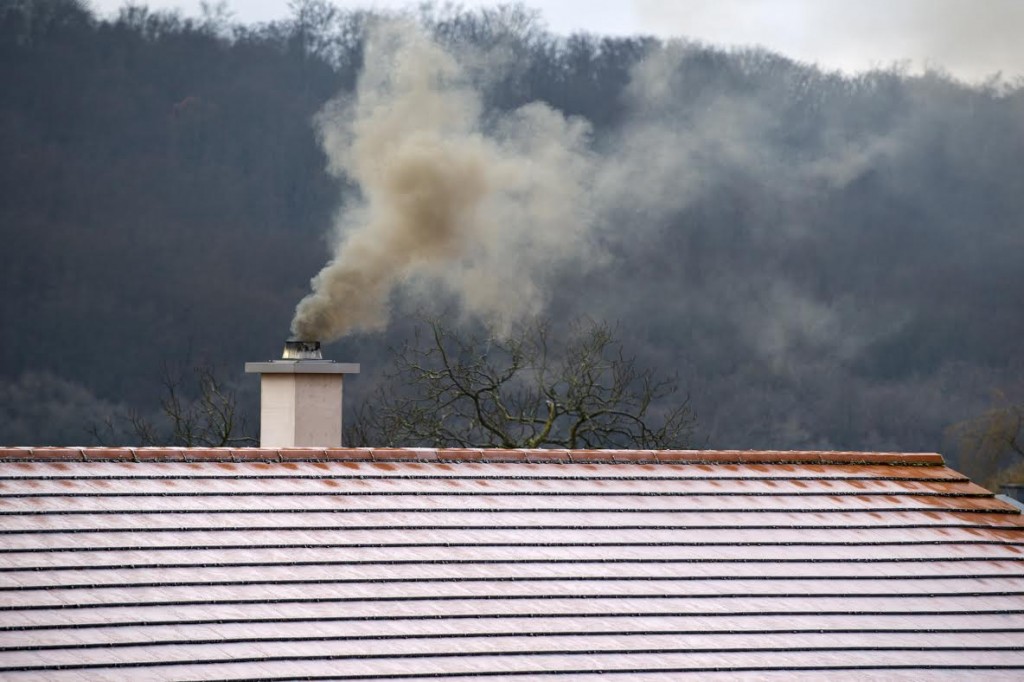
A chimney with drafting issues means that the air-flow is not occurring correctly - up and out, up and out...that's the goal here people. When your chimney is not drafting correctly, smoke is not headed out the correct way either (up and out, up and out), and ends up pouring back into the home, and while it may be mild, it starts to show up as the dark-soot line across the top of the fireplace, or along the top of the mantle - not ideal.
We have been asked about cleaning that off before - it can be done, but it may not come off completely. If there's any indication of your chimney having drafting issues do not wait around until you've ruined the aesthetics of your fireplace or mantle.
If you've not had the chimney swept or inspected, now is the time - give your certified Chimney Outfitters a call!
Are Chimney Sweeps Licensed?
The Chimney Sweeping Industry, in general, is not a licensed industry - meaning that you do not need to obtain a license in order to perform the skill of chimney sweeping. But - that is not to say that you just throw your hands up in defeat of finding a "good-one" and go with the guy who knows a guy that said, "whats-his-face, cleans chimneys."
Do you even know his name?
Let's have some CMO-to-Homeowner real-talk for a minute:
We talk endlessly about the importance of the chimney sweep - why, how often, and what the unintended repercussions are for not having your chimney swept - we've been there many-many times, but who sweeps that chimney can be the difference between a clean and functional chimney, and a clean and unsuitable chimney (that means unsafe).
Currently the Chimney Safety Institute of America holds the standards by which all of our Chimney Sweeps, here at B+E, are certified.
Ah-yes, certified. While the industry isn't a "licensed" industry, there are certifications which can ensure that "whats-his-face" has the credentials that align with industry standards - the CSIA claims, "The CSIA Certified Chimney Sweep® credential is acknowledged by industry organizations, insurance underwriters, local, state and federal agencies as the measure of a chimney sweep’s knowledge about the evaluation and maintenance of chimney and venting systems." Please, by all means, fact-check that...we'll wait here for you to return. Basically, they hold the ticket to ensuring your chimney sweep has the skill and the know-how.
We're not going to waste anymore of your time here, because we want you to be able to get on with it, and get that chimney swept - it is fire-burning season and we're smelling those chimney fires as we speak, so to make things a bit easier, and to ensure you're empowered to make safe and well-educated decisions we've provided the link to the Certified Chimney Sweep search on the CSIA website.
You can [and should] certainly search for us, because we're on there - but so are other certified chimney sweeps, that better align with proper industry standards for cleaning and assessing the chimney/venting systems of your home:
CSIA Certified Sweeps & Technicians
We are represented by the below CSIA Certified Chimney Sweeps here at B+E:
Zach Seaton
Troy Keen
Adam Goebel
Kevin Tackett
Paul Johnson
David Dickenson
As always, Brick + Ember Outfitters strives to educate, equip, and empower its homeowners to ensure the safety and functionality of the chimney, masonry and venting systems of each home.
Please do not hesitate to reach out with any questions you may have about your chimney, masonry or venting concerns or curiosities!
Gas vs Wood Burning Fireplaces: Which is Better?
Fireplaces are beautiful addition to any home, but in colder climates, fireplaces are often used as a source of heat generation. Thus, the fuel it uses becomes an important factor. Which is a better option: gas or wood? Let’s take a look at several important categories and how gas and wood measure up.
Ease of use
If ease is important to you, then gas is certainly at an advantage here. It doesn’t get much easier than flipping a switch to get an instant fire. Wood burning fireplaces are like living organisms in that they need to be created and sustained. This requires more effort—from getting wood (then arranging it in a certain way) to starting the fire and keeping it burning with kindling.
Fuel cost
If you happen to live on land with an abundance of trees, chopping wood for fuel is easy and cheap enough. In the event that you live in a metropolitan area, firewood is available for purchase at most hardware or home improvement stores. Natural gas isn’t expensive, but it is more costly than free wood or the cost of a few logs.
Maintenance
Gas fireplaces require little maintenance since they don’t make messes. Wood burning fireplaces require significantly more work. In addition to the resulting soot, ash, and burned logs, creosote builds up in your chimney which requires regular chimney sweeping. Choosing not to do so could result in a chimney fire.
Experience
Gas fireplaces generate heat and look like a traditional fire. But many would argue that it’s not the same experience if you don’t hear the crackle of logs and smell its rustic smell.
Clearly, there is no right or wrong answer when it comes to gas vs wood burning fireplaces; it simply comes down to preference and priorities. If you want to install a fireplace in your home—gas or wood burning—contact Brick + Ember Outfitters today. We can take care of all of your chimney and masonry needs.
Meet Jimmy!
Meet Jimmy: B+E's Outfitter of the Month for October

Jimmy is the main point of contact for realtors -- from the time they call in for an estimate until the work is complete. He enjoys the personal interactions he is able to have with our real estate partners and is excited to grow new and old relationships. Jimmy is always willing to help his coworkers while maintaining his responsibilities and pursuing new opportunities.

Trulia Suggests Fall is the Best Time to Buy or Sell a Home
The folks over at Trulia recently indicated that Fall may be an ideal time to sell or buy a home - we're not necessarily opposed to their insights related to the proposition and, be it that we are a chimney and masonry company, the closer to fire-burning season, the more attentive we get to how you can add a little value to your buyer/seller.
The first consideration to be had is that while many agents may consider the Fall to be their down-time, it doesn't necessarily mean that homes are off of the market. In fact, some sellers may have re-considered the value of their homes, they may have redecorated, and frankly the Fall could be the season in which some of those homes look the most attractive - bottom line, some sellers may take the price down a few notches because, come winter, holding onto the home until the Spring is a huge sunk cost - double-mortgages are not generally a thing to be celebrated.
Sellers are worn out and the buyers are serious - it seems to be a season of insanely fast selling in the Broad-Ripple/Meridian-Kessler area. We've heard of homes selling within in hours, if not less - and in some cases, selling for more than their original asking value - that is some serious wheeling and dealing if we may say-so ourselves!
However, as an agent who has been to this rodeo a time or two, we want to leave you with some tips as you consider the things above as we head into fire-burning season - you've got to be the calm in the whirlwind of home buying/selling:
Many of the homes we service here at Brick + Ember Outfitters (Broad Ripple/Meridian Kessler) have older masonry chimneys - inspections, which include a sweep and camera inspection, are critical for these homes.
The chimney serves as the exhaust to the furnace and the fireplace - those flue tiles (or stainless steel chimney liners) need to be up-to-snuff and free of creosote, cracks/holes, and any other potentially hazardous issues related to their proper function. As an agent, we suggest you deliver this sort of advice to your home-buyers or sellers as it can certainly create a more informed buyer/seller, with potential to negotiate and leverage in the sale of the home.
"Home Includes a Beautiful Wood-Burning Fireplace that has been Cleaned & Inspected by a Certified Chimney Sweep (of the CSIA)" sounds pretty up-to snuff, doesn't it?
As an agent you must also know that not all of the chimney sweeps are here are certified by the Chimney Safety Institute of America and could end up burning a bridge with you and your client if you don't choose wisely.
Brick + Ember Outfitters sweeps are certified by the CSIA to ensure the safety and functionality of your home's chimney systems.
Chimney Draft Issues 101
If you have a chimney, chances are that you have at least heard of chimney draft issues, even if you haven’t experienced them.
As we delve into the topic of chimney drafts, it’s important to first understand what a draft is and how it works. Draft is the term used to describe how air flows up a chimney or how gasses travel up the stack (which is why it is also referred to as stack effect). The temperature of the flue gasses come into play, as does volume, speed, and pressure.
How does chimney draft work?
Flue gasses move up the chimney because a vacuum is created. The pressure in the chimney is usually less than that outside of the house because of the temperature difference between the two. The draft effect is caused because the air inside the chimney is being pushed up by the air in the house.
In the winter, air outside is colder and heavier than that within the house. When air comes off of a fire, it’s hot and expands, causing it to be pushed up the chimney to the cooler air outside. If this doesn’t happen correctly, problems can occur.
Causes of draft common problems
Airflow issues
Draft problems can be caused by Dynamic Wind Loading. When wind is blowing on one side of the house and not the other, a vacuum can be created, sucking air out of the house. Air will pull down on the chimney, preventing it from exiting a home.
Fans
Bad draft can also occur when chimneys have to overcome fans (kitchen, bathroom, radon) in the house. It’s fairly easy for a fan to overtake fireplaces or wood stoves. This can be solved by allowing “make up air” in the house.
Air coming in
Sometimes, air blows down the chimney if the chimney is short or next to a larger building. This can also occur if a home is located at the base of a mountain. Raising the chimney to a proper height is a potential solution, as is adding a chimney stack.
If you have questions regarding air draft issues in your home, give Brick + Ember Outfitters a call. We’ll be happy to take care of all of your chimney needs.